![]()
Welcome to the second instalment in the series, Applying Principles of Psychodynamic Therapy To Explain Depression In Third Culture Kids and Expats.

Licensed Mental Health Care Counsellor
& Psychodynamic Therapist (PDT-1)
Safe and Secure. SSL Encrypted.

Timothy Bruns2026-07-30Trustindex verifies that the original source of the review is Google. I looked for therapists that work specifically with TCK's and I'm so happy I found Wherapy. Philip has been able to help me with specific things related to my itinerant upbringing. My favorite thing about Philip is that even in sessions where I don't feel I have much to talk about we end up having amazingly productive conversations. I always come away with something tangible to thnk about or work on. michelle thomas2026-02-06Trustindex verifies that the original source of the review is Google. Phillip from Wherapy has been extremely helpful to me. I was very overwhelmed with a lot of emotions and depression. Being a Third Culture Kid, growing up in Kenya, sorting out my roots and multicultural viewpoints is not something most therapists understand. He has helped me to sort through a lot of feelings and information and be able to start separating things into manageable pieces. He is easy to talk to, extremely insightful, and able to get at the heart of complex matters fast. He has also recommended very specific actions to take in resolving complex issues. I highly recommend working with him if you are struggling with any sort of overwhelming situations in your life, especially if they are complex and multilayered (and/or multicultural). Thank you so much for all your help, Phillip! Thiago Esslinger2025-10-01Trustindex verifies that the original source of the review is Google. Philip is highly skilled at what he does. He creates an environment that is both professional and safe. For TCKs looking to better understand themselves, Wherapy is a great choice🇨🇭🇵🇦🇧🇷🇺🇸 John Kaiser2025-03-25Trustindex verifies that the original source of the review is Google. I’m very grateful I found Phillip. As a Third Culture Kid (TCK), I’ve faced unique challenges that have been hard to articulate. After just three sessions, I already feel a sense of clarity and validation I haven’t experienced before. Phillip understands the nuances of the TCK experience and is helping me address long-standing issues I didn’t fully realize were connected to that part of my identity. His approach is thoughtful, compassionate, and grounded in real understanding. I highly recommend Phillip to any TCK looking to come to terms with complex feelings around belonging, identity, and transitions. Christina Rosén2025-01-09Trustindex verifies that the original source of the review is Google. I started working with Philip to navigate a challenging period and unresolved Third Culture Kid (TCK) issues 🇻🇪🇸🇪🇩🇪🇯🇵. His own TCK experience and profound understanding of common struggles that can affect those with cross-cultural mobile, expat upbringing really resonated with me. My experience with Philip has been nothing short of transformational. Each session left me feeling empowered with practical guidance for immediate application. His professionalism, empathy, and attentive listening create a safe, supportive space where you feel heard. Philip is incredibly eloquent and skilled in reframing thought patterns. I would whole heartedly recommend him to anyone seeking personalised online therapy. Tobias Lindström Battle2024-08-12Trustindex verifies that the original source of the review is Google. Philip is a gentle, personable, and kind therapist. As a TCK, he can really relate which is difficult to find in therapy and so important to make it work. I can really recommend speaking to Philip for anyone who needs a little guidance on how to find a path that works for them. Personally, I am so happy to have come across him. :) Ivana Tlstovicova2024-07-04Trustindex verifies that the original source of the review is Google. When I have decided to start with online therapy I was concerned, but after several session I would like to HIGHLY recommend Philip. :) He is listening to me, trying to understand my feelings, helping me to find the right direction how to deal and live my life fully despite my concerns. He is very patient, polite, even his voice is calming me down. My feelings are very personal and private, but Philip has my full trust and I to start the therapy with him was the best decision I have made in past few months. This is not the end of my journey, but I believe that with Philip I will get there. THANK YOU PHILIP !!! :) Sawdah Jaleel2024-03-06Trustindex verifies that the original source of the review is Google. Philip is a kind and understanding therapist well versed in his field! He provided the direction i needed,truly recommend him and his services- 🇱🇰 nermine noeman2023-10-22Trustindex verifies that the original source of the review is Google. Thank you so much Philip for such a valuable session, for the sincere listening and empathy i found. Also the professional generous analysis that gave me both serenity and assurance. Nermine from Egypt 🇪🇬 Jammy Correa2023-08-31Trustindex verifies that the original source of the review is Google. It was excellent ! Thank you very much for your services! Greetings from Nicaragua 🇳🇮

Hi there! - My name's Philip Andersson. I am an Adult Third Culture Kid (ATCK), and a psychotherapist.
I founded Wherapy in 2018 with the intention of offering therapy to Third Culture Kids and Adult Third Culture Kids who are suffering from identity issues, trauma, depression or anxiety.
I studied psychodynamic psychotherapy at Sverigehälsan in Malmö and I have a degree in Social Work from Linköping University.
If you have a question or want to get to know me better, send me via WhatsApp or email.
A Third Culture Kid (TCK) is someone who has spent a significant portion of their formative years living outside of their parent's passport country. If your parents are from The UK but you're living in The UAE, then you're a Third Culture Kid.
The term "third culture" is used to refer to the amalgamation of the child's two other cultures, namely that of the parent's home country and the host country. The child creates the "third culture" for inter-personal and intra-personal benefit. Not only do they use it to understand themselves on a deeper level, but also as a way of relating to people.
I provide online therapy services for Third Culture Kids (TCKs) and Adult Third Culture Kids (ATCKs) with all types of mental health problems, everything from trauma and identity issues to depression and anxiety.
Not only am I a licensed mental-health care counsellor and psychotherapist well-versed in psychodynamic therapy and cognitive behavioral therapy, I am also a Third Culture Kid.
To read about me click here.
To read more about how I can help you, scroll down.
Not every Third Culture Kid needs therapy, but many benefit from working with someone who understands the specific psychology of growing up between cultures — the grief of repeated goodbyes, the confusion around identity and belonging, the difficulty settling in one place. Third Culture Kids counseling that's tailored to this experience, rather than generic talk therapy, tends to get to the heart of these issues faster.
Third Culture Kids generally report higher levels of stress, identity confusion, grief related to repeated losses, and difficulties with belonging compared with non-TCK peers. These factors are associated with an increased risk for anxiety and depression. (Source)
A 2021 study of TCKs in the United Arab Emirates found that 68.7% of participants scored in a range indicating risk for clinical depression. Researchers cautioned that this does not mean 68.7% had a diagnosed depressive disorder, but it does suggest that Third Culture Kids are more likely to exhibit depressive symptoms. (Source)
A 2023 study of 143 TCKs aged 7–17 in Switzerland found that perceived stress and acculturative stress were significant predictors of mental health difficulties. Higher resilience appeared to buffer some of these negative effects. (Source)
A 2022 systematic review concluded that adjustment outcomes among Third Culture Kids are mixed. While many demonstrate strong adaptability, cultural competence, and resilience, others experience elevated emotional and social adjustment challenges, especially during transitions and repatriation. (Source)


✔ Legacy Pricing
✔ No Time-Limit On Session Packs
✔ 15% Discount On Sessions
✔ Transferable Sessions
✔ Access To A Vast Library Of Online Mental-Health Courses
✔ Free Seminars
$14 / MONTH
$99 / YEAR
$325 / LIFETIME

TCKs often struggle to balance loyalty between their passport culture and their host culture, making it hard to feel fully rooted in either one.
Integration struggles can make it hard to form a clear personal identity, often leading to underlying feelings of loneliness.
Blending different cultural values and traditions can be challenging. This complicates how Third Culture Kids see and understand themselves
Due to frequent moves and impermanent living situations, TCKs may find it difficult to commit to relationships and often lack strong, lasting connections.


ATCKs often feel torn between wanting to put down roots and wanting to hold onto the distinct sense of self they built growing up between cultures.
Due to feeling isolated and misplaced, Adult Third Culture Kids are fearful of committing to one place and are therefore more likely to move frequently, leading to a higher risk of feeling even more isolated and misplaced.
The usual challenges of young adulthood (career, relationships, identity) become more complex when filtered through an ATCK's multicultural lens.
Adult Third Culture Kids frequently deal with depression, anxiety, trauma, identity issues, attachment issues, loneliness and isolation, hyperawareness of time constraints, and commitment issues.


Are you Third Culture Kid who's having a hard time adjusting to adult life? Then give this course a go!
This two-week course aims to give you all the tools you need to tackle the challenges of adult life and achieve self-fullfilment.
Get access to this course and other self-help material by subscribing to Wherapy+

![]()
Welcome to the second instalment in the series, Applying Principles of Psychodynamic Therapy To Explain Depression In Third Culture Kids and Expats.
![]()
Those of you who are familiar with my work will know that I am a psychodynamic psychotherapist, meaning that I am trained in the principles of psychoanalysis.
![]()
Before I begin discussing the mental health aspects of a global upbringing, let me tell you that I am in the unique position of being able to see this issue from two perspectives,
![]()
The diagnosis Separation Anxiety Disorder (SAD) pertains to when an individual feels excessive anxiety at the prospect of being separated from people or places that they feel a strong emotional attachment towards.
![]()
Inner-conflict is something we all deal with at some point in our lives. In fact, it is the root cause of depression. However, inner-conflict can look different depending on one’s past and what one is dealing with in the present.
![]()
Since long before the conception of the term Third Culture Kid there have been many metaphors for the cross-cultural lifestyle,
Are you a Third Culture Kid or Global Nomad who’s having a hard time adjusting to adult life? Then give this course a go!
![]()
To be whisked away by a childhood memory can be a wonderful thing, especially if it means an escape from the mundanity of adulthood.
![]()
As part of a long adventure into the world of self-help books, I have come across a lot of different theories and mindsets which I intend to gradually share with you throughout the years on this very blog.
In the debut episode of A Therapist’s Mailbox — titled Between Savannahs and Cornfields — therapist Philip Andersson receives a letter from an American woman who grew up in Kenya.
At first glance, growing up abroad can seem like the coolest thing ever. But once we delve deeper into the psyche of those who have lived abroad during their childhood (Third Culture Kids) we can see the damage that has been done.
![]()
I was reviewing Maslow’s Hierarchy of Needs the other day for a separate project and came to think about how it could be applied to Adult Third Culture Kids.
![]()
Here at Wherapy, not only do we strive to help people who feel out of place in society, but we also work hard to provide content that may challenge people’s perceptions of themselves.
In this episode of Coffee With A Therapist, Philip Andersson, psychotherapist and founder of online mental health website Wherapy, gives his insights on how the expat lifestyle can affect mental health and ultimately lead to depression.
![]()
The topic of Third Culture Kids came up in a discussion I had with a mentor of mine the other day.
![]()
I was reading a book the other day by renowned psychiatry professor Johan Cullberg entitled Crisis and Development and came across a chapter about the symptoms of a personal crisis and how they unravel over time.
![]()
Ruth Van Reken and David Pollock provide numerous theories regarding the cross-culture lifestyle in their book Third Culture Kids: Growing Up Among Worlds.
![]()
Who am I? – is a question that most, if not all, Third Culture Kids find hard to answer.
Feeling unsure about one’s identity is perhaps the defining issue of the Third Culture Kid experience.
![]()
Remember senior year? – Those last 9 months of school when everything seemed completely meaningless?
The time when the mere act of walking through the corridors of your school would leave you with a sombre feeling?
![]()
I thought I would use today’s blog post as an opportunity to explore the many ways in which Adult Third Culture Kids react when they return to their passport culture.


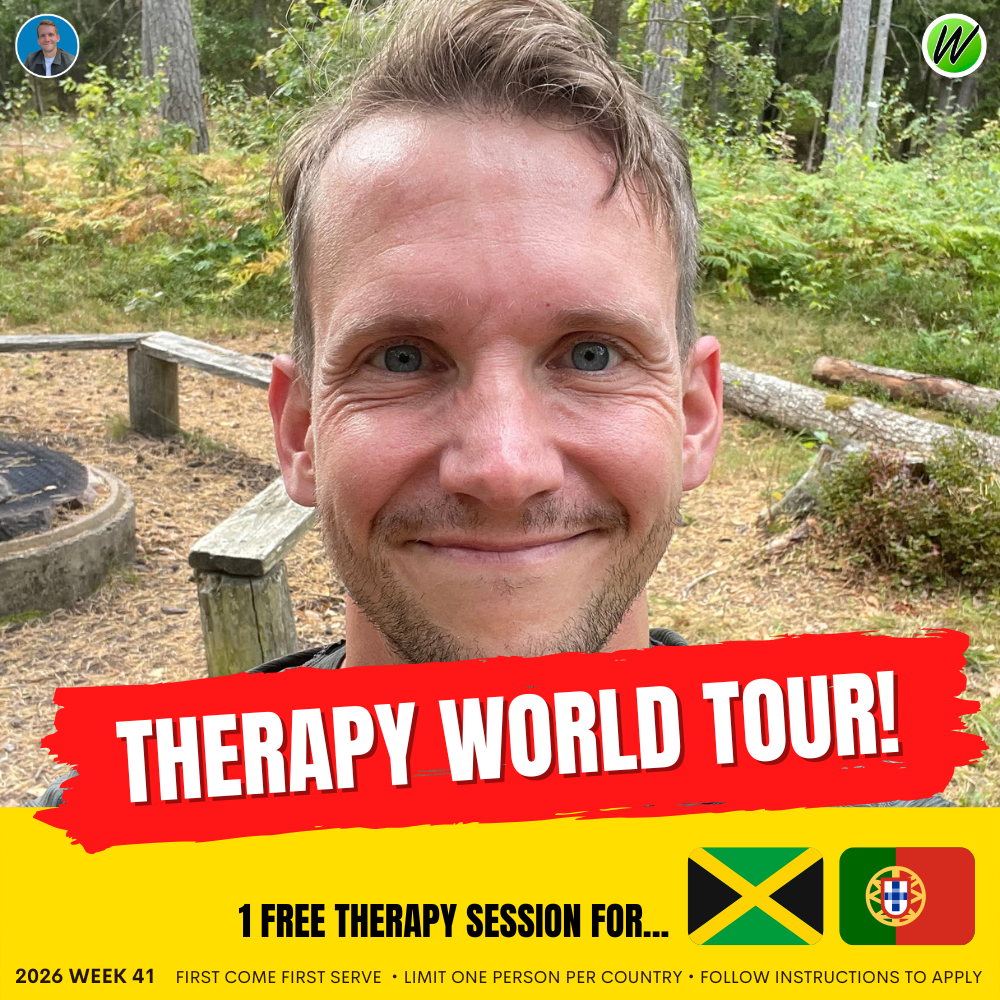
Join me on my journey to becoming the first therapist to treat one person from every country in the world!
Every Monday I publish a photo next to this text with the flags of two different countries. If you're from any of these countries, you're welcome to apply for a free session. Just click this link and fill out the application form.
Subscribers to my newsletter will be informed of the two countries one day in advance. So, if you want to make sure you're the first to contact me, don't forget to subscribe!


With years of experience as a psychotherapist, and a lifetime of experience as a Third Culture Kid and Adult Third Culture Kid myself, I feel confident I can help you.
My Third Culture Kids counseling combines psychodynamic therapy with behavioral approaches, tailored to what you need. A session should feel like a safe space — somewhere you can share your experiences and inner thoughts without fear of judgment. That's why building a genuine working relationship, early on, matters so much to me.
The goal of my Third Culture Kids therapy is to help you understand and accept your multifaceted cultural identity, and to work through the forms of inner conflict that are common to the Third Culture Kid experience. I also help with cultural adjustment, emotional support, and personal issues that go beyond the TCK experience itself.


Third Culture Kids therapy focuses on the specific experience of growing up between cultures — repeated moves, shifting friendships, and the quiet work of building an identity that doesn't map neatly onto one passport country. A general therapist can still help with anxiety or depression, but they may not immediately recognize how much of that struggle is rooted in the TCK experience itself. Therapy built around this population starts from that understanding rather than working toward it.
Not every Third Culture Kid needs therapy, but many find that Third Culture Kids counseling gets to the heart of things faster than a generic approach would. Growing up between cultures brings a particular kind of grief, identity confusion, and difficulty with belonging — having a counselor who already understands that context means less time spent explaining and more time spent working through it.
Research into Third Culture Kids psychology points to a few consistent patterns: higher rates of stress and identity confusion, a strong sense of grief tied to repeated losses, and a complicated relationship with the idea of "home." At the same time, TCKs often develop real strengths — adaptability, cultural fluency, and a broad sense of perspective. Good therapy works with both sides of that picture, not just the struggles.
Common themes include identity integration (making sense of multiple cultural influences rather than choosing just one), grief connected to frequent moves and goodbyes, difficulty forming lasting relationships, and the loneliness that can come from feeling like you don't fully belong anywhere. Depression, anxiety, and trauma often show up too, usually shaped by these underlying TCK experiences.
Yes — the TCK experience doesn't end in childhood. Adult Third Culture Kids often carry the same underlying patterns into adulthood: tension between wanting to settle down and wanting to stay unique, a tendency to move frequently rather than commit to one place, and everyday adult challenges like career and relationships filtered through a multicultural lens. Third Culture Kids therapy for adults addresses these patterns directly, rather than treating them as unrelated issues.
Sessions happen over video call, which suits this population particularly well since TCKs and ATCKs are often scattered across countries and time zones. You can work with a therapist who understands the TCK experience regardless of where you're currently living, without needing to find someone local who may not share that background.
Telephone Number: +46(0)70-817-0550
Email: [email protected]
Address: Norrbygatan 29, 59176 Borensberg, Sweden
Name: Wherapy AB
Founded: 2020-06-01
CEO: Philip Andersson
Bank Account Number: 5528-4525
Organisations Number: 559266-8866
VAT: SE8760000000000346193818